In today’s fast-paced texting and online chat culture, it’s easy to feel lost in a sea of abbreviations, slang, and shorthand.
One term that’s popping up more often is “quell”.
But what does it actually mean, and how do you use it correctly in conversation?
In this article, we’ll break down the meaning of “quell”, explore its origins, give real-life texting examples, and show you how to avoid common mistakes.
By the end, you’ll know exactly how to quell confusion (pun intended!) and communicate like a pro in 2026.
What Does “Quell” Mean? (Definition & Origin)
At its core, “quell” is a verb that means to suppress, calm, or put an end to something. While it originates from old English (think Middle Ages), in modern chat culture, it’s often used figuratively.
Simple definition:
- Quell (verb): To calm, stop, or suppress an emotion, situation, or problem.
Origin:
- Comes from the Old English word cwellan, meaning “to kill or destroy.”
- Over time, the meaning softened to “to quiet” or “to pacify.”
In texting, “quell” is often used when someone wants to stop drama, calm tensions, or reassure someone. It’s not as common as “lol” or “brb,” but it has a slightly formal, witty vibe that can make your texts stand out.
How to Use “Quell” in Texts or Chat
Using “quell” in a chat might feel fancy, but it’s actually very versatile. Here’s how you can do it naturally:
- Calming a friend:
“Don’t worry, I’ll help you figure it out. That should quell your panic.” - Stopping gossip or drama:
“Let’s quell the rumors before they spread any further.” - In gaming or group chats:
“Team, we need to quell the tension and focus on the mission.”
Tips:
- Pair quell with emotions (panic, fear, anger) or situations (rumors, drama).
- Avoid overusing it too much can feel stiff in casual chats.
- Works well in DMs, forums, and even professional Slack messages.
Examples of “Quell” in Conversations
Here are some real-world scenarios where “quell” can shine:
Example 1: Friend panicking about an exam
- Friend: “I’m gonna fail my math test!”
- You: “Relax, I’ll help you study. That should quell your anxiety.”
Example 2: Stopping a group chat argument
- Chat: “No way! That’s not true!”
- You: “Let’s quell the argument before it gets messy.”
Example 3: Social media post
- Tweet: “Sending positive vibes to quell negativity online 😌✨”
These examples show that quell is useful both in serious contexts and playful online chats.
Common Mistakes or Misunderstandings
Even seasoned texters sometimes misuse quell. Avoid these traps:
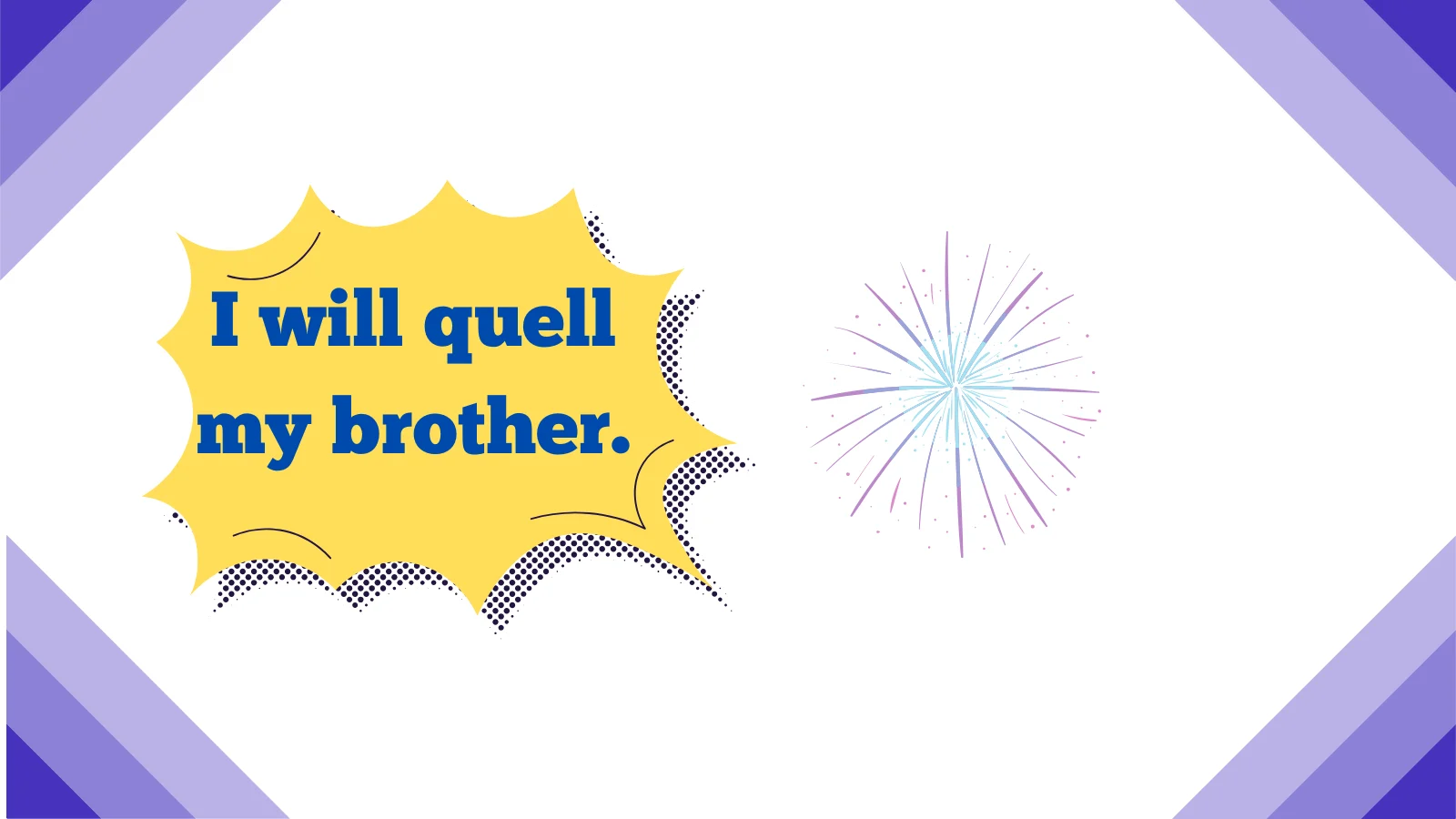
- Mistake 1: Using it like “kill” literally
❌ “I will quell my brother.”
✅ “I will quell my brother’s worries.” - Mistake 2: Confusing it with “cancel”
❌ “Let’s quell the meeting.” (Sounds like you’re ending it violently)
✅ “Let’s quell the confusion before the meeting.” - Mistake 3: Overcomplicating casual chats
❌ “I will now proceed to quell my anxieties regarding this predicament.”
✅ “This should quell your worries.”
Pro Tip: Keep it short and context-appropriate. It works best when paired with emotions or minor conflicts.
Related Slangs or Abbreviations
If you like quell, you might also use or see these:
- Calm down – casual equivalent
- Chill – informal, friendly alternative
- Pacify – slightly formal like quell
- Diffuse – often used in conflict resolution
- De-escalate – common in gaming or professional chats
These words are often interchangeable depending on tone, audience, and platform.
Why Knowing “Quell” Matters in 2026 Chat Culture
Understanding terms like quell keeps you ahead in digital communication. Here’s why:
- It boosts clarity – Avoid miscommunication in group chats or DMs.
- It shows sophistication – Using slightly rare words can make your texts memorable.
- It helps in professional contexts – Slack, Teams, or LinkedIn messages benefit from calm, precise language.
- It keeps you trend-savvy – Updated for 2026, quell is gaining traction in social media captions, memes, and motivational posts.
FAQs About “Quell”
- Q: Is “quell” an abbreviation?
A: No, it’s a full word, not an abbreviation. - Q: Can I use “quell” in casual texting?
A: Yes! Just make sure it fits the context usually to calm or stop something. - Q: Is “quell” formal or informal?
A: It’s slightly formal but can be used in casual chats to sound clever. - Q: What emotions pair best with “quell”?
A: Panic, anger, fear, rumors, confusion, tension. - Q: Can I use “quell” on social media?
A: Absolutely! Tweets, posts, and captions can all include it. - Q: How is “quell” different from “calm down”?
A: “Quell” is slightly more sophisticated; “calm down” is casual. - Q: Is “quell” trending in 2026?
A: Yes, especially in text chats, forums, and motivational posts. - Q: Can I replace “quell” with “pacify”?
A: Often yes, but “pacify” is more formal and less chat-friendly.
Conclusion
In short, quell is a versatile, slightly elevated term that adds clarity and sophistication to your texting and chat messages.
Whether you’re calming a friend, stopping drama, or just sounding clever online, knowing how to use quell can level up your digital communication.
By mastering quell, you’re not just understanding a word you’re enhancing your chat game for 2026 and beyond.
Leave a Reply