Category: Uncategorized

  • Type Shit Meaning Explained The Savage Internet Slang Now

    Type Shit Meaning Explained The Savage Internet Slang Now

    If you’ve spent any time on TikTok, Twitter/X, Instagram comments, Discord, or group chats, you’ve probably seen someone reply with “type shit” and thought… wait, what does that even mean? 🤔

    You’re not alone.

    Modern internet slang moves fast, and type shit meaning isn’t always obvious from the words themselves.

    But understanding it can save you from confusion and help you sound way more natural in online conversations.

    In this Updated for 2026 guide, we’ll break down exactly what type shit means, where it came from, how to use it correctly, and when not to use it.

    By the end, you’ll know how to spot it, understand it instantly, and even use it confidently (if the vibe fits).


    What Does “Type Shit” Mean? (Definition & Origin)

    Simple Definition

    Type shit is a slang phrase used to agree with, affirm, or emphasize a statement, often meaning:

    • “Exactly”
    • “That’s the vibe”
    • “That’s how it is”
    • “I feel that”

    It doesn’t usually mean anything literal about “types” or “shit.” Instead, it works as verbal punctuation a way to reinforce what was just said.

    Example:
    “I’m just trying to stay lowkey and get my money up.”
    “Type shit.”

    In this case, type shit means “yeah, same energy” or “I agree completely.”


    Where Did “Type Shit” Come From?

    The phrase has roots in African American Vernacular English (AAVE) and was popularized through:

    • Hip-hop culture 🎵
    • Rap lyrics
    • Street slang
    • Social media platforms like TikTok and Twitter/X

    Rappers have been using type shit for years to describe a certain lifestyle, mindset, or way of moving:

    “On that grind type shit.”

    By the early 2020s, it became mainstream internet slang, and by 2026, it’s firmly embedded in online chat culture.


    How to Use “Type Shit” in Texts or Chat

    Using type shit correctly is all about context and tone. It’s casual, informal, and vibe-based.

    Common Ways People Use “Type Shit”

    1. As an Agreement

    Used to show you relate or agree.

    • “I’m tired of fake energy.”
      “Type shit.”

    2. As Emphasis

    To reinforce a statement you just made.

    • “I’m on my focus and discipline type shit this year.”

    3. As a Vibe Check

    It can signal shared mindset without saying much.

    • “Gym, work, sleep. No drama.”
      “Type shit.”

    Best Platforms to Use It

    Type shit is most common on:

    • Text messages 📱
    • TikTok comments
    • Twitter/X replies
    • Instagram DMs
    • Discord chats
    • Reddit (casual threads)

    🚫 Avoid using it in:

    • Professional emails
    • Work Slack channels (unless super casual)
    • Academic writing
    • Formal conversations

    Examples of “Type Shit” in Conversations

    Here’s how type shit meaning changes slightly depending on context:

    Casual Texting

    Friend:

    “I’m just trying to protect my peace these days.”

    You:

    “Type shit.”

    Meaning: I feel that completely.


    Social Media Comment

    Post:

    “Cut off distractions and focus on yourself.”

    Comment:

    “Real growth type shit.”

    Meaning: That’s real and valid.


    Funny / Relatable Use

    Friend:

    “Why do I get motivation at 2 a.m.?”

    You:

    “Night owl productivity type shit 😂”

    Meaning: This is relatable and funny.


    Self-Descriptive Use

    • “I’m on my healthy eating, gym-every-day type shit.”

    This means you’re describing your current mindset or lifestyle.


    Common Mistakes or Misunderstandings

    Even though it’s popular, type shit is often misunderstood.

    Mistake 1: Taking It Literally

    It doesn’t mean actual types of anything.

    Wrong interpretation:

    “What type of shit?”

    Correct understanding:

    It’s just slang emphasis.


    Mistake 2: Using It in Formal Settings

    Saying type shit in a work meeting or email will sound unprofessional.

    Bad example:

    “We should improve productivity type shit.”

    😬 Don’t do that.


    Mistake 3: Overusing It

    Using it in every sentence can make it annoying or cringe.

    Better:

    • Use it sparingly
    • Let it match the vibe

    Mistake 4: Using It Without Understanding the Culture

    Because it comes from AAVE, it’s important to:

    • Use it naturally
    • Avoid mocking or exaggerating it

    Respect the culture—it’s not just “internet noise.”


    Related Slangs or Abbreviations (Similar Meanings)

    If you’re learning type shit meaning, you might also see these:

    Similar Slang Terms

    • Real – agreement or validation
    • Facts – strong agreement
    • Deadass – seriously / honestly
    • Fr / FRFR – for real / for real for real
    • Say less – understood
    • Big mood – highly relatable
    • That’s the vibe – shared feeling

    Example Comparison

    • “I’m just focusing on myself.”
      • Facts
      • Big mood
      • Type shit

    All mean agreement—but with slightly different tones.


    How to Use “Type Shit” Correctly (Quick Guide)

    Do This

    • Use it casually
    • Match the tone of the conversation
    • Use it to agree or emphasize
    • Keep it short and natural

    Avoid This

    • Using it formally
    • Overusing it
    • Forcing it into sentences
    • Using it sarcastically if you don’t mean it

    Why “Type Shit” Is Still Popular in 2026

    Slang survives when it’s:

    • Easy to say
    • Emotionally expressive
    • Flexible in meaning

    Type shit checks all three boxes.

    It’s:

    • Short
    • Relatable
    • Perfect for fast-moving digital conversations

    As online communication gets shorter and more vibe-based, phrases like type shit stay relevant.


    FAQs About “Type Shit” Meaning

    1. What does type shit mean in slang?

    It means agreement, emphasis, or shared understanding—similar to “facts” or “that’s the vibe.”

    2. Is type shit rude or offensive?

    It’s informal and mildly profane, but not offensive in casual settings.

    3. Can I say type shit in a professional setting?

    No. It’s best kept for casual chats and social media.

    4. Is type shit AAVE?

    Yes, it originates from African American Vernacular English and hip-hop culture.

    5. Can type shit be used as a full reply?

    Yes. Many people use it as a standalone response.

    6. Does type shit always mean agreement?

    Most of the time, yes—but sometimes it emphasizes a mindset or lifestyle.

    7. Is type shit still used in 2026?

    Absolutely. It’s still common across TikTok, texting, and online chats.

    8. What’s a cleaner alternative to type shit?

    You can use “facts,” “exactly,” or “that’s the vibe.”


    Final Thoughts

    To sum it up, type shit meaning is all about agreement, emphasis, and shared energy.

    It’s not meant to be literalnit’s a vibe-based phrase that adds flavor to modern conversations.

    When used correctly, type shit helps you:

    • Sound more natural online
    • Connect with others quickly
    • Express agreement without overexplaining

    Just remember: keep it casual, respect the culture it comes from, and don’t force it where it doesn’t belong.

    Updated for 2026, this slang isn’t going anywhere anytime soon.
  • Unlock the Truth Behind Whether or Not Meaning Today

    Unlock the Truth Behind Whether or Not Meaning Today

    Updated for 2026 If you’ve ever been scrolling through a text conversation or a social media thread and stumbled upon someone typing “whether or not”, you might have paused for a second and wondered, “Wait… what does that really mean in chat?” Don’t worry, you’re not alone.

    In modern texting and online chats, understanding subtle phrases like “whether or not” is crucial to avoid misunderstandings and sound more fluent in digital communication.

    In this guide, we’ll break down what “whether or not” means, how it’s used in everyday chats, real-life examples, common mistakes, and related slang you’ll encounter online.

    By the end, you’ll be texting like a pro and understanding subtle nuances in conversations.


    What Does “Whether or Not” Mean? (Definition & Origin) 📖

    At its core, “whether or not” is a phrase used to express a choice between alternatives or to indicate that something will happen regardless of a condition.

    • Formal definition: Used to introduce two possibilities and show that the outcome is uncertain or that it does not matter which option occurs.
    • In casual texting/chatting: It often emphasizes that a decision, opinion, or action applies in all cases, no matter the circumstances.

    Origin:
    The phrase “whether or not” has been in English for centuries as a conjunction. However, in texting and online forums, it’s often abbreviated or used as a more casual expression to indicate flexibility or indecision.

    Example in text:

    “I’ll come to the party, whether or not you’re going.”
    Translation in chat-speak: “I’ll show up no matter what.”


    How to Use “Whether or Not” in Texts or Chat 💬

    Using “whether or not” correctly in texting can make your messages clearer and more natural. Here’s how to do it:

    1. To show certainty despite conditions “I’m going to finish this game, whether or not it’s late.”
    2. To present options or outcomes “You should tell her, whether or not she gets upset.”
    3. To express neutrality or indifference “I’ll eat pizza tonight, whether or not you want tacos.”

    Pro Tip: In casual texting, you might see people shorten it or tweak it for speed:

    • “idc if u come or not” (meaning the same as “whether or not”)
    • “gonna do it anyway whether u like it or not”

    Using it correctly helps convey your intent clearly, avoiding confusion in group chats or DMs.


    Examples of “Whether or Not” in Conversations ✨

    Here are some real-life chat examples showing “whether or not” in action:

    Example 1 – Friends chatting:

    • Alex: “Are you coming to the beach?”
    • Jamie: “Yeah, whether or not it rains 🌧️”

    Example 2 – Social media comment:

    • User1: “Will you still post pics if the lighting is bad?”
    • User2: “Absolutely, whether or not it looks perfect 😎”

    Example 3 – Work chat:

    • Boss: “Do you think this report will be ready?”
    • Employee: “Yes, whether or not the team finishes early”

    Funny/relatable example:

    “I’ll eat the last slice of cake, whether or not you’ve had your share 🍰😂”

    Notice how in casual texting, tone and emojis help convey the emphasis or humor behind “whether or not.”


    Common Mistakes or Misunderstandings ❌

    Even though “whether or not” is simple, people often misuse it in texting or social media:

    1. Redundant usage:
      • ❌ Wrong: “I’ll do it whether or not or not you agree.”
      • ✅ Correct: “I’ll do it whether or not you agree.”
    2. Confusing it with “if”
      • ❌ Wrong: “I’ll go if or not it rains.”
      • ✅ Correct: “I’ll go whether or not it rains.”
    3. Using it too formally in casual texts
      • ❌ “I shall attend the gathering, whether or not it rains.”
      • ✅ “I’ll come, rain or shine 🌞🌧️”

    Tip: In modern chat, people often simplify it to “rain or shine”, “idc”, or “no matter what” for brevity and relatability.


    Related Slangs or Abbreviations 🔗

    If you want to sound fluent in texting, here are some phrases and abbreviations related to “whether or not”:

    • IDK – “I don’t know” (used when undecided)
    • IDC – “I don’t care” (similar to showing indifference)
    • No matter what – Casual equivalent of “whether or not”
    • RN – “Right now” (often used alongside decisions)
    • TBD – “To be decided” (used for uncertain outcomes)

    Example in text:

    “I’ll join the call rn, idc whether or not you’re there 😅”


    Practical Tips for Texting “Whether or Not” ✅

    • Use it when you want to emphasize certainty despite conditions.
    • Pair it with emojis to show tone (😂😎🌧️).
    • Keep it short in casual chats: “Rain or shine,” “No matter what,” or “idc if…”
    • Check if your audience prefers formal vs casual language. Friends usually like shortened or fun versions, while work chats might require the full phrase.

    Real-Life Scenarios: When to Use “Whether or Not” 💡

    • Group chats with friends: “I’m bringing snacks, whether or not you’re hungry 😋”
    • Social media posts or comments: “Posting my vacation pics today, whether or not anyone likes them 🌴📸”
    • Work or study chats: “I’ll submit the draft tonight, whether or not the team reviews it first.”
    • Dating apps/texting: “I’ll text you later, whether or not you’re busy 😉”

    FAQs About “Whether or Not” 📌

    1. Can I shorten “whether or not” in texts?
    Yes! Common shortcuts: “rain or shine,” “idc if…,” or “no matter what.”

    2. Is “whether or not” formal or casual?
    It can be both. Full form is slightly formal; simplified versions work well in casual texting.

    3. Does it mean the same as “if”?
    Not exactly. “Whether or not” emphasizes that the outcome happens regardless of the condition.

    4. Can I use it in group chats?
    Absolutely! It’s perfect for emphasizing choices or decisions in groups.

    5. How do I add tone in texting?
    Use emojis, punctuation, or playful words: 😅😂🌞.

    6. Is it common on social media?
    Yes, especially on Twitter, Instagram comments, and TikTok captions.

    7. Can it be used sarcastically?
    Totally! Example: “I’ll help you, whether or not you deserve it 🙄”

    8. Are there similar phrases I should know?
    Yes! “No matter what,” “rain or shine,” “idc if…,” “TBD,” and “IDC” are popular variations.


    Conclusion 🎯

    Understanding “whether or not” is more than just knowing the dictionary definition it’s about grasping nuance in texting and chat culture.

    It helps you convey certainty, indifference, or humor depending on the context.

    By learning how to use it naturally, seeing examples, and avoiding common mistakes, you’ll make your digital conversations clearer, funnier, and more relatable in 2026.

  • Unlock the Hidden Power of Embed Meaning Today

    Unlock the Hidden Power of Embed Meaning Today

    Updated for 2026 – If you’ve ever scrolled through social media, forums, or group chats, you might have seen the word “embed” popping up in conversations.

    But what does it really mean, and why do people use it in texting or online chats?

    Whether you’re a casual texter or someone diving into digital culture, understanding embed meaning can save you from confusion and maybe even make your chats look smarter.

    Let’s break it down in simple, human-friendly language, with examples and tips for using it correctly.


    What Does “Embed” Mean? (Definition & Origin)

    In modern texting and online communication, “embed” typically refers to inserting content into another platform or message. It’s not just a tech term anymore; it’s become common slang in digital spaces.

    Origin:

    • The word “embed” comes from tech jargon, meaning to fix or insert something firmly within another object.
    • In the early 2000s, web developers used “embed” for videos, tweets, and images in websites.
    • Over time, it spilled into casual online chats, especially when people talk about sharing content inside messages rather than just linking it.

    In short: to embed = to insert content seamlessly into a chat, post, or platform.


    How to Use “Embed” in Texts or Chat

    Knowing the embed meaning is just the first step—using it correctly is key. Here’s how:

    1. Referring to Videos or Images

    • “Hey, can you embed that TikTok in the group chat?”
    • “I embedded the meme directly into the thread so everyone could see it.”

    2. Discussing Social Media Posts

    • “Don’t just link the tweet, embed it in your blog post—it looks cleaner.”

    3. Tech or Gaming Chats

    • In forums or gaming communities, embed can refer to placing media inside posts.
      Example: “I embedded the map screenshot in the strategy guide.”

    Pro Tip: Use embed when you want to highlight that something is directly viewable without leaving the chat or page.


    Examples of “Embed” in Conversations

    Here are some relatable, real-life chat examples:

    1. Friend to Friend
      • “Did you see the clip I embedded in our chat? 😂”
      • “Yes! That video is hilarious. Embedding it was a smart move.”
    2. Work/Professional Chat
      • “I embedded the chart in the email instead of attaching it.”
      • “Perfect, now everyone can see it without downloading.”
    3. Social Media Post
      • “I embedded your Instagram post in my blog; hope that’s cool!”

    These examples show that embed is versatile and works in casual, professional, and creative contexts.


    Common Mistakes or Misunderstandings

    Even experienced texters sometimes misuse embed. Here are common pitfalls:

    • Using embed instead of link incorrectly
      • ❌ Wrong: “I’ll embed the link here” (if it’s just a clickable URL, not a visible media item)
      • ✅ Correct: “I embedded the video in the chat”
    • Overusing embed in casual texts
      • Some people try to use embed for literally anything shared online, which can sound awkward. Stick to media or content that actually appears inside the message or post.
    • Confusing embed with attach
      • Attach = file you need to download
      • Embed = content visible inside your chat or post

    Related Slangs or Abbreviations

    When learning embed meaning, it helps to know related terms:

    • GIF – Animated images often embedded in chats.
    • DM – Direct Message; sometimes you embed media in a DM.
    • RT – Retweet; in some cases, you can embed tweets in other platforms.
    • HTML – Techy term where embedding originated.

    Understanding these makes your digital conversations smoother and more modern.


    Why Knowing “Embed” Matters in 2026

    By 2026, online communication is more visual and integrated than ever. People expect content to be seamlessly viewable, not just linked. Knowing embed meaning can help you:

    • Communicate clearly in group chats, forums, and social media.
    • Share content effectively without forcing others to click away.
    • Sound tech-savvy without being overwhelming.

    Fun Tip: Embedding makes you look like a digital ninja—your friends won’t even need to leave the chat to enjoy what you shared!


    FAQs About “Embed”

    1. What does embed mean in texting?
      • It means inserting content like videos, images, or posts directly into a chat or message.
    2. Is embed the same as attach?
      • No. Attach usually requires downloading; embed is visible inside the chat.
    3. Can I embed a YouTube video in WhatsApp?
      • You can share the link, and WhatsApp will automatically generate a playable preview—technically an embed.
    4. Where is embed commonly used?
      • Social media, group chats, forums, blogs, and emails.
    5. Is embed considered slang?
      • Yes, in casual texting, it’s modern digital slang.
    6. How do I embed content in a blog?
      • Most platforms allow you to copy an embed code from the media source and paste it directly into your post.
    7. Why is embed important in 2026?
      • Seamless sharing of media keeps chats, social posts, and blogs interactive and user-friendly.
    8. Can embed be used metaphorically?
      • Sometimes, people say they “embedded” an idea into a conversation, meaning they inserted it cleverly.

    Conclusion

    Understanding embed meaning is more than just a tech lesson—it’s part of staying fluent in modern texting and online culture.

    From sharing memes in group chats to embedding charts in emails, knowing how to embed content correctly makes your communication smoother and more impressive.

    Remember: embed = visible content, not just a link or attachment.

    Use it wisely, and your chats will instantly look cleaner and more professional

  • Discover the Secret CEI Meaning That Will Blow Minds Today

    Discover the Secret CEI Meaning That Will Blow Minds Today

    In the ever-evolving world of texting, social media, and online chats, abbreviations have become the secret language of digital conversations.

    One abbreviation that has been popping up more frequently is “CEI”.

    If you’ve seen it in your group chats, TikTok comments, or Discord servers and wondered what it means, you’re not alone.

    Understanding these shortcuts not only helps you stay in the loop but also ensures you don’t misinterpret messages.

    Updated for 2026, this guide will explain the cei meaning, its origin, how to use it, examples in real conversations, and common mistakes to avoid.

    By the end, you’ll be texting like a pro and even impressing your friends with your slang knowledge.


    What Does “CEI” Mean? (Definition & Origin)

    CEI is an abbreviation commonly used in texting and online chats. Its meaning can vary slightly depending on the platform and context, but the most widely accepted definitions in 2026 are:

    • “Can’t Even Imagine” – Used to express disbelief or overwhelm.
    • “Check Everything Immediately” – Often seen in professional or group chat contexts.

    The first meaning, “Can’t Even Imagine”, is the one you’ll see most often in casual social media conversations, memes, and TikTok comment threads. It’s a shorthand way of expressing a feeling that words alone might not capture—perfect for reacting to something shocking, hilarious, or unbelievable.

    The origin of CEI is not precisely documented, but like many internet abbreviations, it evolved organically among younger users on platforms like Twitter, Discord, and Reddit. By 2026, it’s firmly part of mainstream texting culture.


    How to Use “CEI” in Texts or Chat

    Using CEI correctly depends on the tone and context of your conversation. Here are some practical tips:

    Casual Texts & Social Media

    • Example 1:
      Friend: “I just saw a dog skateboarding down my street!”
      You: “CEI 😲”
    • Example 2:
      On Instagram: “They actually got tickets to the sold-out concert?”
      Comment: “CEI, that’s insane 😂”

    Professional or Group Chats

    If using the “Check Everything Immediately” meaning:

    • Example:
      Team Lead: “CEI on the project files before the meeting.”
      Team Member: “On it! ✅”

    Pro Tips:

    • Use CEI for short, punchy reactions.
    • Avoid overusing it—like all slang, context matters.
    • Emojis often enhance the expression when using “Can’t Even Imagine.”

    Examples of “CEI” in Conversations

    Seeing examples makes it much easier to grasp how to use CEI naturally. Here are some realistic chat snippets:

    Scenario 1 – Friends Chatting:

    • Friend 1: “My cat just knocked over a whole cake…”
    • Friend 2: “CEI 🤯”

    Scenario 2 – Gaming Discord:

    • Player 1: “We won the final round with 1 HP left!”
    • Player 2: “CEI, that clutch was unreal 😎”

    Scenario 3 – Social Media Comment Section:

    • TikTok Video: “This dog saved a kid from falling into a pool.”
    • Comment: “CEI, heroes come in all sizes 🐶❤️”

    These examples show CEI’s versatility, from expressing amazement to instructing action in professional settings.


    Common Mistakes or Misunderstandings

    Even seasoned texters sometimes misinterpret CEI. Avoid these pitfalls:

    1. Confusing meanings: Remember that CEI could mean “Can’t Even Imagine” or “Check Everything Immediately.” Context is key.
    2. Using in formal emails: CEI is slang—using it in professional emails without context can seem unprofessional.
    3. Overuse in conversation: Using CEI too frequently can dilute its impact. Save it for moments that truly warrant surprise or amazement.
    4. Mispronunciation attempts: CEI is typically read as the individual letters: “C-E-I,” not as a word like “see.”

    Related Slangs or Abbreviations

    CEI is part of a wider ecosystem of text abbreviations. Some related slangs you might encounter include:

    • SMH – Shaking My Head
    • IDK – I Don’t Know
    • FOMO – Fear Of Missing Out
    • LMFAO – Laughing My Freaking Ass Off
    • OMG – Oh My God

    Knowing these helps you decode modern chats more efficiently and avoid feeling “left out” in fast-moving conversations.


    How to Remember CEI

    Here are some memory tricks to ensure you never forget CEI:

    • Think “Can’t Even Imagine” = CEI whenever you’re surprised or shocked.
    • Associate CEI with your reaction face emoji 😲 for easy recall.
    • Remember Check Everything Immediately for work or gaming contexts—link it with tasks that require urgent attention.

    FAQs About “CEI”

    1. What does CEI stand for in texting?
      CEI usually stands for “Can’t Even Imagine” in casual chats, or “Check Everything Immediately” in professional contexts.
    2. How do you pronounce CEI?
      Say each letter individually: “C-E-I.”
    3. Is CEI only for social media?
      No, CEI is used in texts, group chats, Discord, Reddit, and even professional messaging apps.
    4. Can I use CEI in formal emails?
      It’s not recommended; CEI is slang and may not be taken seriously in formal communication.
    5. What’s the difference between CEI and OMG?
      CEI is more about imagining or reacting to something unbelievable, while OMG is a general exclamation of shock or surprise.
    6. Is CEI trending in 2026?
      Yes! CEI has gained popularity on TikTok, Discord, and Instagram, making it a current must-know abbreviation.
    7. Can CEI be used sarcastically?
      Absolutely! Text tone often relies on emojis or context to convey sarcasm.
    8. Are there any alternative abbreviations for CEI?
      For “Can’t Even Imagine,” similar abbreviations include IKR (I Know, Right) or SMH (Shaking My Head) depending on context.

    Conclusion

    Understanding CEI is a small but powerful step toward mastering modern chat language.

    Whether you’re reacting to a jaw-dropping TikTok, a shocking friend story, or coordinating urgent tasks with your team, CEI keeps your messages short, punchy, and relatable.

    Remember:

    • CEI = Can’t Even Imagine for casual chats.
    • CEI = Check Everything Immediately for professional or urgent contexts.
    • Context is everything—pay attention to tone and platform
  • Unlock the Shocking Truth Behind Standoffish Meaning Today

    Unlock the Shocking Truth Behind Standoffish Meaning Today

    In today’s fast-paced texting and chat culture, understanding the subtleties of language can make all the difference.

    Have you ever texted someone and they seemed “standoffish”, and you weren’t quite sure what that meant?

    Or maybe you wanted to use the term yourself but didn’t want to sound rude.

    Understanding what standoffish means in modern conversation is more important than ever especially with social media, chat apps, and texting slang constantly evolving.

    In this guide, we’ll break down the meaning of standoffish, explore how it’s used in texts, give real-life examples, and even point out common mistakes.

    By the end, you’ll be texting confidently without misreading signals or sounding awkward.


    What Does “Standoffish” Mean? (Definition & Origin

    Standoffish is an adjective used to describe someone who seems distant, reserved, or unfriendly. It’s that vibe when someone is physically or emotionally distant, making it hard to approach them.

    • Origin: The word has been around since the mid-1800s, originally describing someone who literally stands off or keeps a distance. Over time, it evolved to describe social behavior rather than physical distance.

    Key points:

    • It’s not always negative—sometimes people are naturally quiet or shy.
    • Being standoffish doesn’t necessarily mean someone dislikes you—they just may prefer personal space or limited interaction.

    In texting/chat culture:
    When someone is standoffish in texts, they might:

    • Give short, one-word replies
    • Take longer than usual to respond
    • Avoid emojis or casual chatter

    How to Use “Standoffish” in Texts or Chat

    Texting tone can be tricky to read, so knowing how to use standoffish correctly can save you from miscommunication.

    Examples of usage:

    1. “I think she’s a little standoffish, but maybe she’s just busy 😅.”
    2. “He’s been acting standoffish in our group chat lately, barely replying.”
    3. “Don’t take it personally if someone seems standoffish—sometimes it’s just their personality.”

    Tips for using it naturally:

    • Use it in a friendly, observational tone, not accusatory.
    • Pair it with context—texts without context can make it sound harsh.
    • Emojis like 😐, 🤷, or 🫤 help soften the meaning in chat.

    Where it’s commonly used:

    • WhatsApp groups
    • Discord servers
    • Social media DMs
    • Texting friends or coworkers

    Examples of “Standoffish” in Conversations

    Here are some fun and relatable texting examples that show how standoffish behavior appears in modern chats:

    Example 1: Group Chat
    You: “Hey, are we still meeting at 7?”
    Friend: “Yeah.”
    You (thinking): “Hmm… a bit standoffish, maybe they’re tired.”

    Example 2: Online Dating Chat
    Them: “K.”
    You: “Okay… that seems standoffish 😅”

    Example 3: Workplace Chat
    Colleague: “Noted.”
    You: “They’re a bit standoffish, but super efficient.”

    Pro tip: Recognizing standoffish behavior in texts helps manage expectations and prevents unnecessary stress.


    Common Mistakes or Misunderstandings

    Texting can easily misinterpret tone, so here are some pitfalls to avoid:

    • Assuming rudeness: A short reply doesn’t always mean someone is being standoffish—it could be a busy day.
    • Overanalyzing emojis: Some people rarely use emojis; it doesn’t automatically mean standoffish behavior.
    • Using “standoffish” as an insult: Remember, it describes behavior, not character.

    Quick checklist:

    • Is the person usually talkative?
    • Are they intentionally avoiding conversation?
    • Could it be situational?

    Related Slangs or Abbreviations

    Here are some related texting slang and abbreviations to expand your chat vocabulary:

    • Ghosting: Disappearing from conversation entirely 🫥
    • Distant: Similar to standoffish, just more neutral
    • Reserved: Someone who doesn’t share personal info easily
    • BRB / AFK: Not standoffish, but explains temporary absence
    • Lowkey / Highkey: Can describe tone or emotional distance

    Tip: Pairing these terms with context helps you communicate effectively and avoid misunderstandings.


    Practical Tips for Responding to Standoffish Texts

    1. Give them space: Don’t overtext if replies are short.
    2. Keep it light: Use humor or casual emojis to ease tension.
    3. Ask directly: If it’s important, politely ask if everything’s okay.
    4. Observe patterns: One-off standoffish texts aren’t necessarily a trend.

    FAQs About “Standoffish” Meaning

    1. Is being standoffish the same as being rude?
    Not necessarily. Someone can be reserved without being disrespectful.

    2. Can “standoffish” describe online behavior?
    Yes! Short replies, lack of emojis, and delayed responses are signs online.

    3. Is it a negative trait?
    Sometimes, but it can also indicate shyness or introversion.

    4. How can I tell if someone is standoffish vs busy?
    Look for consistent patterns in their behavior over time.

    5. Can I call someone standoffish in chat?
    Yes, but use it observationally, not as an insult.

    6. Are standoffish people hard to befriend?
    Not always—once you respect their space, they can open up.

    7. Is “standoffish” used in memes or social media posts?
    Absolutely! It’s popular for relatable content about texting frustrations.

    8. Can standoffish behavior be misread?
    Yes, tone is tricky in texts. Context is key.


    Conclusion

    Understanding the standoffish meaning in texting is more than just learning a new word it’s about reading social cues, navigating chat culture, and avoiding misunderstandings.

    Being able to recognize when someone is standoffish helps you respond appropriately, whether you’re texting friends, coworkers, or online communities.

    Remember, standoffish behavior isn’t inherently negative it can reflect personality, mood, or situational context.

    Observing patterns, keeping your tone friendly, and using context clues are key to mastering this modern texting term.

  • Discover the Brilliant Meaning Everyone Is Talking About Now

    Discover the Brilliant Meaning Everyone Is Talking About Now


    In the fast-paced world of texting and online chats, words and phrases evolve faster than ever.

    Understanding slang or abbreviations is key to staying in the loop, avoiding misunderstandings, and expressing yourself naturally.

    One term that pops up frequently across social media, text messages, and forums is “brilliant.”

    But what does “brilliant” mean in texting?

    Is it just a compliment, or does it carry extra vibes depending on context?

    In this guide, updated for 2026, we’ll break down the meaning, usage, common mistakes, and even related slang so you can text like a pro.

    Whether you’re messaging friends on WhatsApp, posting on Reddit, or DM-ing on Instagram, this article has you covered.


    What Does “Brilliant” Mean? (Definition & Origin)

    At its core, “brilliant” is a term used to describe something excellent, clever, or impressive. In texting, it’s often used casually to praise ideas, actions, or achievements.

    Origins:

    • The word “brilliant” comes from the Latin beryllus, meaning a shining gemstone.
    • In English, it has long been used to describe brilliance in light, intelligence, or performance.
    • In digital conversations, it’s adapted as positive reinforcement, often with added excitement like emojis or capitalization:
      • “That plan is BRILLIANT 😎”

    Quick takeaway: In chat culture, saying someone’s idea or move is “brilliant” is akin to giving them a virtual high-five.


    How to Use “Brilliant” in Texts or Chat

    Using “brilliant” correctly can make your messages sound enthusiastic, friendly, or witty. Here’s how:

    1. As praise:

    • “You finished that project early? Brilliant!”

    2. Expressing excitement or approval:

    • “We’re meeting at 7? Brilliant 😁”

    3. In a slightly sarcastic tone:

    • “You left your coffee on the roof? Brilliant 🙄”
      (Context matters—tone in text can be tricky!)

    Tips for texting brilliance:

    • Pair it with emojis for clarity.
    • Keep context in mind—sarcasm can be misread.
    • Capitalization can emphasize enthusiasm: BRILLIANT!

    Examples of “Brilliant” in Conversations

    Here’s a glimpse into how “brilliant” shows up in real-life texting scenarios in 2026:

    Example 1 – Friend Chat:

    • A: “I just baked cookies for everyone at work.”
    • B: “Brilliant! Can I have one? 🍪”

    Example 2 – Group Chat:

    • A: “Meeting moved to 3 PM.”
    • B: “Brilliant, thanks for the update!”

    Example 3 – Social Media DM:

    • A: “Check out my new TikTok trend.”
    • B: “Absolutely brilliant, can’t wait to see it go viral 😎”

    Pro Tip: Using brilliant in casual conversation conveys positivity and keeps your messages uplifting.


    Common Mistakes or Misunderstandings

    Even simple words like “brilliant” can be tricky in text-based communication:

    1. Misinterpreting sarcasm:

    • “You lost your keys again? Brilliant…”
      (Could sound harsh if tone isn’t clear.)

    2. Overusing the word:

    • Using brilliant too often can make it lose impact.
      • Alternative: awesome, fantastic, genius, top-notch.

    3. Ignoring context:

    • Texting “brilliant” about something sad or unfortunate can confuse readers.

    Tip: If you want to convey sarcasm or irony, pair brilliant with an emoji (🙃, 😏) to clarify your tone.


    Related Slangs or Abbreviations

    Here are some texting alternatives or related slang that pair well with brilliant:

    • Lit – Exciting or amazing
    • Epic – Memorable or impressive
    • Genius – Clever or smart
    • 👌 – Emoji shorthand for approval
    • 🔥 – Indicates something is hot or popular
    • BRB / LOL / FOMO – Often found in the same casual conversations

    Pro Tip: Mixing brilliant with these modern abbreviations keeps your texting style fresh and 2026-ready.

    • “Your cosplay is BRILLIANT 🔥👌”

    Why Knowing “Brilliant” Matters in 2026 Texting Culture

    Texting culture evolves rapidly, and words like brilliant do more than compliment—they build rapport, show humor, and keep conversations engaging. Knowing how to use it effectively helps you:

    • Avoid miscommunication in digital messages.
    • Sound friendly, enthusiastic, or witty.
    • Stay in sync with evolving slang trends online.

    FAQs About “Brilliant” in Texting

    1. Is “brilliant” just a British thing?
    Not really. While it’s commonly used in the UK, digital culture has made it global.

    2. Can “brilliant” be sarcastic?
    Yes, context and emojis often clarify sarcasm.

    3. How is “brilliant” different from “awesome”?
    “Brilliant” leans slightly more intellectual or clever, while “awesome” is broader enthusiasm.

    4. Can I use “brilliant” in professional chats?
    Yes, it works in friendly professional contexts: “Brilliant idea for the campaign!”

    5. Is it appropriate for teens and Gen Z?
    Absolutely, especially with emojis and casual texting.

    6. What emojis pair best with “brilliant”?
    😎, 😁, 🔥, 👌, ✨, 🙌

    7. Can “brilliant” be shortened in slang?
    Not commonly, but abbreviations like brill are sometimes used informally.

    8. Is it common on social media?
    Yes, especially in Instagram DMs, TikTok comments, and Twitter threads.


    Conclusion

    Understanding “brilliant” in texting is more than just knowing a word—it’s about reading context, expressing enthusiasm, and staying on top of 2026’s chat culture.

    Whether praising a friend’s clever idea, reacting to a fun update, or just keeping conversations lively, brilliant adds sparkle to your messages.

    Next time you type brilliant in your chat, remember the tone, the emoji, and the context it’s your secret sauce for fun, relatable, and modern communication.

  • Unlock the Ultimate Flyer Meaning That Will Blow Your Mind

    Unlock the Ultimate Flyer Meaning That Will Blow Your Mind

    In the fast-moving world of texting and online chat, abbreviations pop up everywhere. From “LOL” to “BRB,” these short forms save time and keep conversations flowing.

    One abbreviation you might have seen recently is “flyer”.

    But what does it really mean in texting culture?

    Is it a casual compliment, a call to action, or something else entirely?

    Understanding “flyer” is more than just decoding letters it’s about staying fluent in the evolving language of online chats, social media, and messaging apps.

    Updated for 2026, this article provides clear definitions, practical examples, common mistakes, and FAQs to make you a flyer-savvy texter in no time!


    What Does “Flyer” Mean? (Definition & Origin) 🧐

    In modern texting and internet slang, “flyer” is often used to describe someone who is cool, stylish, confident, or moves quickly in social situations. The term has roots in old-school slang: “fly” has long been used in hip-hop and street culture to describe someone or something impressive or attractive. Adding “-er” turns it into a noun, basically meaning “a person who embodies ‘fly’ energy.”

    Origin Highlights:

    • Hip-hop slang (1990s–2000s): “Fly” = cool/awesome.
    • Text/chat adaptation: “Flyer” became a quick, playful term in messaging apps to describe a friend who’s stylish, fast-moving, or just really impressive.
    • Social media: Now widely used on platforms like Instagram, TikTok, Discord, and Snapchat.

    Key point: In texts, “flyer” doesn’t refer to a literal paper or advertisement (that’s the old-school meaning). Context is everything!


    How to Use “Flyer” in Texts or Chat 💬

    Using “flyer” correctly in a message can make you sound in-the-know without overcomplicating your conversation. Here’s a simple guide:

    1. Complimenting a Friend:

    • “Dude, you showed up in that outfit—total flyer energy!”
    • “She’s a flyer, always rocking those kicks.”

    2. Describing Someone Who Moves Fast:

    • “Gotta go, the flyer squad’s hitting the club early.”
    • “He’s a real flyer—never late, always first to the party.”

    3. Online/Game Contexts:

    • In gaming chats: “Our team needs a flyer for the quick missions.”
    • In forums: “Looking for flyers to help organize the event fast.”

    Pro Tip: Always consider context. If it’s unclear, pair “flyer” with a clarifying adjective or emoji. Example: “She’s a flyer 😎” is universally friendly, whereas “he’s a flyer” might confuse non-text-savvy readers.


    Examples of “Flyer” in Conversations ✨

    Here are some realistic text examples to help you see flyer in action:

    Casual Chat:

    • A: “Who’s coming tonight?”
    • B: “The usual flyers, can’t miss it!”

    Social Media DM:

    • “Omg, your fit is fire 🔥 You’re such a flyer!”

    Group Text:

    • “We need more flyers for the trip. Who’s in?”

    Work/Project Chat:

    • “Need a flyer to send updates ASAP. Any volunteers?”
      (Here it slightly merges back into the “quick-moving” literal sense.)

    Notice how context determines whether it’s a compliment, a literal descriptor, or playful banter.


    Common Mistakes or Misunderstandings ❌

    Even seasoned texters sometimes misuse flyer. Here’s what to avoid:

    1. Confusing with actual flyers (paper handouts):
      • Wrong: “I handed out a flyer to the club—she’s a flyer now.”
    2. Overusing the term in unrelated contexts:
      • Using flyer in formal emails or professional chats can seem out-of-place.
    3. Ignoring tone:
      • Without emojis or context, “he’s a flyer” might seem ambiguous or confusing.
    4. Misgendering or stereotyping:
      • Avoid implying “flyer” is gender-specific—it’s neutral and applies to anyone.

    Related Slangs or Abbreviations 🔗

    Texting is full of abbreviations that pair well with flyer or have similar vibes:

    • Lit – exciting, fun, impressive
    • GOAT – Greatest of All Time
    • Fleek – perfectly styled or executed
    • Flex – showing off confidently
    • Savage – bold or daring in a fun way

    Example in chat:
    “Your outfit is lit, you’re a flyer, total flex!” 😎


    When and Where to Use “Flyer” 🌎

    Common contexts for “flyer”:

    • Social media: Instagram, TikTok, Twitter
    • Group chats: Friends, school, college, gaming
    • Gaming/Esports: Quick, efficient players
    • Youth culture texts: Compliments, casual banter

    Insider tip: Using flyer in memes or GIF captions makes the message trendier and instantly relatable to younger audiences.


    Updated Examples for 2026 📱

    Here’s a modern take for current chats:

    • “She slid into the chat like a flyer, got everyone’s attention instantly 😎.”
    • “Our TikTok collab was pure flyer energy hit 100k views in a day!”
    • “Just booked the tickets time to fly like a flyer to the festival 🎶.”

    Notice the mixture of emojis, casual tone, and digital culture references—it’s how 2026 users communicate.


    FAQs About “Flyer” 📝

    1. Q: Is “flyer” positive or negative?
      A: Positive—it’s a compliment indicating style, confidence, or quickness.
    2. Q: Can I call anyone a flyer?
      A: Yes, it’s gender-neutral and informal.
    3. Q: Does “flyer” have other meanings?
      A: Yes, literally it can mean a paper handout, but in chat slang it’s about personality or style.
    4. Q: Can I use “flyer” in professional messages?
      A: Usually no, it’s best for casual texting, DMs, or social media.
    5. Q: What emojis pair well with “flyer”?
      A: 😎🔥💨✨ – to emphasize coolness, speed, or flair.
    6. Q: Is “flyer” similar to “flex”?
      A: Somewhat they both convey confidence, but “flyer” focuses more on style and movement.
    7. Q: Can “flyer” be used for teams or groups?
      A: Absolutely—e.g., “The flyer squad is here!”
    8. Q: How do I sound natural using “flyer”?
      A: Pair it with casual adjectives, emojis, or context-specific references.

    Conclusion 🎯

    In 2026, texting and online slang evolve faster than ever.

    “Flyer” is a fun, versatile term that highlights someone’s style, confidence, or quickness in social contexts.

    Whether you’re complimenting a friend, describing a fast mover, or spicing up a social media caption, flyer adds personality and flair to your messages.

    Remember: context is king.

    Pair it with emojis, clarify when necessary, and use it in casual or creative spaces to keep your chats trendy.

  • Discover the Ultimate Cuddle Meaning That Will Melt Hearts

    Discover the Ultimate Cuddle Meaning That Will Melt Hearts

    In the fast-paced world of texting and online chatting, even simple words can carry layers of meaning.

    One such word that pops up frequently is “cuddle.”

    Whether you’re scrolling through Instagram DMs, replying on Snapchat, or chatting on WhatsApp, understanding what “cuddle” means can prevent miscommunications and maybe even help you convey affection in just the right way.

    In this guide, we’ll break down everything you need to know about “cuddle”, from its definition to real-life usage, common mistakes, and related slang.

    By the end, you’ll be texting like a pro while staying relatable and modern. Let’s dive in!


    What Does “Cuddle” Mean? (Definition & Origin)

    At its core, “cuddle” is a verb that means to hold someone close in your arms in a gentle and affectionate way. In texting and online chats, it’s often used in a figurative or playful sense to express warmth, care, or desire for closeness.

    Origin of the Word

    The term “cuddle” has been in the English language since the late 17th century, originating from the Middle English word cuddel, meaning “to embrace or hug warmly.” Over time, it became a staple in both spoken and written English to express affection.

    Cuddle in Digital Culture

    Online, “cuddle” is no longer just physical. In texts and social media:

    • It can indicate comfort or emotional closeness.
    • It’s often used playfully with friends or partners.
    • Emojis like 🫂, 🤗, and ❤️ often accompany it for extra emphasis.

    Pro Tip: When someone texts “cuddle pls” or “wanna cuddle?” they’re usually signaling they want emotional or physical closeness—context matters!


    How to Use “Cuddle” in Texts or Chat

    Understanding how to use “cuddle” properly in your messages is key. Here are some popular ways:

    1. Casual and Friendly

    When texting a close friend:

    “Ugh, rough day 😩 can I just cuddle my pillow and cry?”

    This shows comfort or venting rather than romantic intent.

    2. Romantic or Flirty

    With a partner or crush:

    “Miss u 😘 let’s cuddle tonight 🫂”

    Here, “cuddle” conveys affection, intimacy, and sometimes flirtation.

    3. Virtual Comfort

    Sometimes people use “cuddle” in digital spaces to offer support:

    “Sending u a virtual cuddle 🤗 hope ur day gets better ❤️”

    This usage is perfect for friends or online communities where physical proximity isn’t possible.


    Examples of “Cuddle” in Conversations

    Seeing examples in action makes it easier to understand. Here are some common scenarios:

    Texting a Friend

    • Friend 1: “Feeling super anxious rn 😓”
    • Friend 2: “Awww wanna cuddle virtually? 🤗”

    Flirting with a Crush

    • You: “Binge-watching shows tonight 😏”
    • Crush: “Perfect, we can cuddle while watching 😘”

    Online Community or Forum

    • “After this stressful week, all I want is some good memes and a cuddle 😩💖”

    Playful Use

    • “Me: struggling with Monday
      Also me: need a cuddle with my blanket 🫂”

    Tip: Context and tone are everything. The same word can be romantic, friendly, or just cute depending on who you’re texting.


    Common Mistakes or Misunderstandings

    Even popular words like “cuddle” can be misunderstood. Here’s what to watch out for:

    1. Assuming Everyone Wants Physical Cuddles
      Some people use “cuddle” figuratively. Don’t assume they mean real-life hugs unless clarified.
    2. Overusing in Group Chats
      Dropping “cuddle” in large groups can confuse people—best reserved for 1-on-1 chats.
    3. Ignoring Emojis and Context
      Emojis like 🫂, 🤗, or ❤️ clarify intent. Without them, your message might seem ambiguous.
    4. Misreading Tone
      “Cuddle pls” from a friend might just mean “comfort me,” not a romantic gesture.

    Related Slangs or Abbreviations

    If you love chat lingo, “cuddle” often appears alongside other popular abbreviations:

    • Hugz / Huggie – Playful alternatives to “cuddle.”
    • Snug / Snuggle – Often interchangeable with cuddle, slightly cuter.
    • V-Cuddle – Short for virtual cuddle (online only).
    • IRL – “In real life,” sometimes used like: “Can we cuddle IRL?”
    • 💞 / 🫂 / 🤗 – Emojis enhancing the cuddle vibe.

    Tips for Using “Cuddle” Like a Pro

    Here’s how to make your cuddle texts 2026-ready:

    1. Match Tone & Relationship
      Romantic, friendly, or supportive—pick your vibe carefully.
    2. Pair With Emojis
      A simple 🫂 or 🤗 makes your intention clear.
    3. Use Abbreviations When Appropriate
      “V-cuddle” works perfectly for online-only chats.
    4. Respect Boundaries
      Not everyone is comfortable with cuddle talk. Check the context first.
    5. Stay Playful & Fun
      Texting is casual—don’t overthink it!

    Updated Examples for 2026 Chat Culture

    The way we text evolves rapidly. In 2026, here’s how “cuddle” trends online:

    • TikTok & Instagram Reels: Users often caption cozy videos with “cuddle vibes 🫂 #relatable.”
    • Snapchat & DMs: Friends send gifs or Bitmojis hugging with “cuddle time?”
    • Gaming Communities: Players send “cuddle break” mid-game for humor or stress relief.

    Keeping up with trends ensures your messages feel current and relatable.


    FAQs About “Cuddle”

    1. Q: Is “cuddle” always romantic?
      A: No! It can be friendly, comforting, or playful depending on context.
    2. Q: Can I use “cuddle” with coworkers?
      A: Generally no, unless you’re very close friends—context matters.
    3. Q: What’s the difference between cuddle and snuggle?
      A: “Snuggle” is often cuter or more playful, while “cuddle” can be serious or affectionate.
    4. Q: Can I use emojis with cuddle?
      A: Yes! 🫂, 🤗, and ❤️ help clarify your meaning.
    5. Q: What does “v-cuddle” mean?
      A: It’s a virtual cuddle, usually via text, call, or video chat.
    6. Q: Is “cuddle” appropriate in memes?
      A: Absolutely! Memes often use “cuddle” humorously to show comfort or laziness.
    7. Q: Can “cuddle” be used sarcastically?
      A: Yes! E.g., “Oh great, Monday again… cuddle 😒”
    8. Q: Does texting “cuddle” count as flirting?
      A: Sometimes! Context and relationship determine if it’s playful or romantic.

    Conclusion

    Understanding the meaning of “cuddle” in texting is more than just knowing the dictionary definition it’s about reading context, tone, and intent.

    Whether you’re offering comfort to a friend, flirting with someone special, or just having fun online, knowing how to use “cuddle” correctly ensures your messages hit the right note.

    Remember to pair it with emojis, respect boundaries, and adapt to your chat environment.

    With these tips, your digital communication becomes warmer, clearer, and more fun

  • Unlock the Secret Fantasy Meaning That Will Blow Your Mind

    Unlock the Secret Fantasy Meaning That Will Blow Your Mind

    In the ever-evolving world of texting, chat apps, and social media, words aren’t always what they seem.

    One term that pops up frequently but can confuse people is “fantasy”.

    Whether you’ve seen it in a DM, on TikTok, or in a group chat, understanding the fantasy meaning is crucial if you want to stay fluent in modern texting culture.

    In this guide, we’ll break down exactly what fantasy means in chats, give real-life examples, and explain how you can use it correctly and avoid embarrassing misinterpretations.

    Updated for 2026, this article ensures you’re in the know for the latest slang trends!


    What Does “Fantasy” Mean? (Definition & Origin)

    The word fantasy traditionally refers to imagining things that aren’t real—like daydreaming about magical worlds, superheroes, or impossible scenarios. But in texting and chat culture, fantasy often has a slightly different, more playful twist:

    • Definition (Texting Version): In chats, fantasy typically refers to someone’s imaginative scenario or desire, often related to daydreams, crushes, or even mild flirtation.
    • Origin: This use emerged online in forums, Discord chats, and dating apps, where users would preface or describe their personal “fantasy” situations. Over time, it became shorthand for playful imagination in casual conversations.

    💡 Pro Tip: Always pay attention to context. The meaning can be lighthearted (like dreaming about a vacation) or more personal/intimate depending on the chat.


    How to Use “Fantasy” in Texts or Chat

    Using fantasy correctly can make your messages relatable and fun—but misuse can lead to confusion. Here’s a simple guide:

    1. Describing daydreams:
      • “My fantasy this weekend? Sleeping in and binge-watching shows all day.”
      • Casual, harmless, relatable.
    2. Flirtatious context:
      • “That fantasy we talked about… maybe we should make it real 😏”
      • Often used between people who know each other personally.
    3. Creative/imaginative conversations:
      • “Imagine a fantasy world where cats run the government 🐱👑”
      • Great for memes, social media posts, or playful storytelling.

    Key takeaway: “Fantasy” signals imagination, desire, or playful thought. Tone matters!


    Examples of “Fantasy” in Conversations

    Seeing real-life examples helps cement the meaning:

    • Group Chat Example:
      • Alex: “Weekend plans?”
      • Jamie: “Fantasy: all-you-can-eat pizza and no responsibilities 🍕✨”
    • Flirty DM Example:
      • Sam: “Your fantasy about our trip… still valid?”
      • Riley: “Absolutely 😏 Can’t wait!”
    • Social Media Post:
      • “My fantasy for 2026? A tiny cabin in the mountains with zero WiFi 🏔️”

    Notice how fantasy is flexible—it can be funny, imaginative, or slightly romantic depending on the context.


    Common Mistakes or Misunderstandings

    Even seasoned texters can slip up. Here’s what to watch for:

    • Using fantasy literally:
      • Wrong: “I have a fantasy about dragons.”
      • Right (chat context): “My fantasy this weekend is binge-watching Netflix.”
    • Ignoring tone: Fantasy can imply flirtation. If unsure about your audience, clarify your intent.
    • Overusing the term: Sprinkling fantasy in every text can feel awkward. Use it sparingly for emphasis or humor.

    Related Slangs or Abbreviations

    When learning fantasy, it’s helpful to know related texting language:

    • FOMO: Fear of missing out; can appear in imaginative contexts.
    • IRL: In real life; sometimes used to contrast fantasy with reality.
    • Daydreaming: Literal version of fantasy, often playful.
    • OTP (One True Pairing): Fans often describe romantic fantasies in this way.
    • Wishful thinking: Close cousin of fantasy in casual texting.

    📌 SEO Tip: Linking to related slang articles like “IRL Meaning” or “FOMO Meaning” can boost internal SEO and help readers explore further.


    Tips for Using “Fantasy” Like a Pro

    Here are some practical ways to incorporate fantasy into your texts:

    • Keep it playful: Use emojis to set the tone.
    • Match your audience: Romantic fantasies belong in private chats, while casual/funny fantasies suit group conversations.
    • Use in storytelling: Perfect for creative chats, memes, or fan communities.
    • Combine with other slang: “Fantasy IRL” or “FOMO fantasy” can feel fresh and trendy.

    Updated for 2026: Recent Trends

    Online in 2026, fantasy has some new twists:

    • TikTok captions: People post “my fantasy life vs. reality” videos, mixing humor with relatability.
    • Discord & gaming communities: Users talk about “fantasy setups” for games or roleplay.
    • AI-generated fantasies: ChatGPT or AI story prompts are often labeled “fantasy ideas.”

    These trends show that fantasy remains versatile and culturally relevant in both humor and creativity.


    FAQs About “Fantasy Meaning”

    1. What does fantasy mean in texting?
      • It refers to playful imagination, daydreams, or desires.
    2. Is fantasy always romantic?
      • No, it can be casual, humorous, or creative.
    3. Can I use fantasy in professional chats?
      • Usually not—stick to personal, social, or creative contexts.
    4. Is fantasy slang or formal language?
      • Slang/colloquial; mainly used in casual conversations.
    5. How is fantasy different from daydreaming?
      • Daydreaming is literal; fantasy in chat can be playful or exaggerated.
    6. Can fantasy be used in memes?
      • Absolutely, it’s very meme-friendly in 2026.
    7. Does fantasy have abbreviations?
      • Not commonly, but it may appear in shortened creative contexts like “fntsy” online.
    8. Where is fantasy most commonly used?
      • Social media, group chats, DMs, Discord servers, and gaming communities.

    Conclusion

    In texting and chat culture, fantasy is all about imagination, desire, and playful thinking.

    From humorous weekend plans to creative storytelling, it’s a term that keeps conversations fun and relatable.

    Remember: context is key. Whether you’re sending a DM, posting on TikTok, or chatting with friends, using fantasy correctly ensures your messages are understood and entertaining

  • The Ultimate Guide to Unencumbered Meaning You’ll Love

    The Ultimate Guide to Unencumbered Meaning You’ll Love

    In today’s fast-paced texting and social media culture, words and abbreviations are evolving faster than ever.

    One term you might see popping up in chats, forums, or even casual DMs is “unencumbered”.

    But what does it really mean?

    Understanding this word can help you read messages more accurately, sound smarter in texts, and avoid misinterpretations that can happen when words feel too “formal” for chat culture.

    Whether you’re a casual texter, a forum enthusiast, or someone curious about modern language, knowing the unencumbered meaning is essential to keep up with conversations in 2026.


    What Does “Unencumbered” Mean? (Definition & Origin)

    Definition:
    At its core, “unencumbered” means free from burdens, obstacles, or responsibilities. Think of it as a state where nothing is holding you back—whether physically, emotionally, or even financially.

    Origin:
    The word comes from the late 16th century, with roots in Middle English “encumberen,” meaning “to block or burden.” Adding the prefix “un-” simply means the opposite: “not burdened.”

    In text/chat terms:
    While “unencumbered” isn’t a classic internet abbreviation like “LOL” or “BRB,” it’s occasionally used in online discussions, especially in Reddit threads, personal development forums, or philosophical chats, to describe someone living freely or without constraints.


    How to Use “Unencumbered” in Texts or Chat

    Using the word “unencumbered” in everyday chat might sound fancy, but it can be relatable if used creatively. Here are some tips:

    1. Context matters:
      • Ideal in longer messages, forums, or social media captions.
      • Works in casual texts if paired with humor or self-reflection.
    2. Examples of usage:
      • “Finally went on vacation with no deadlines feeling totally unencumbered!”
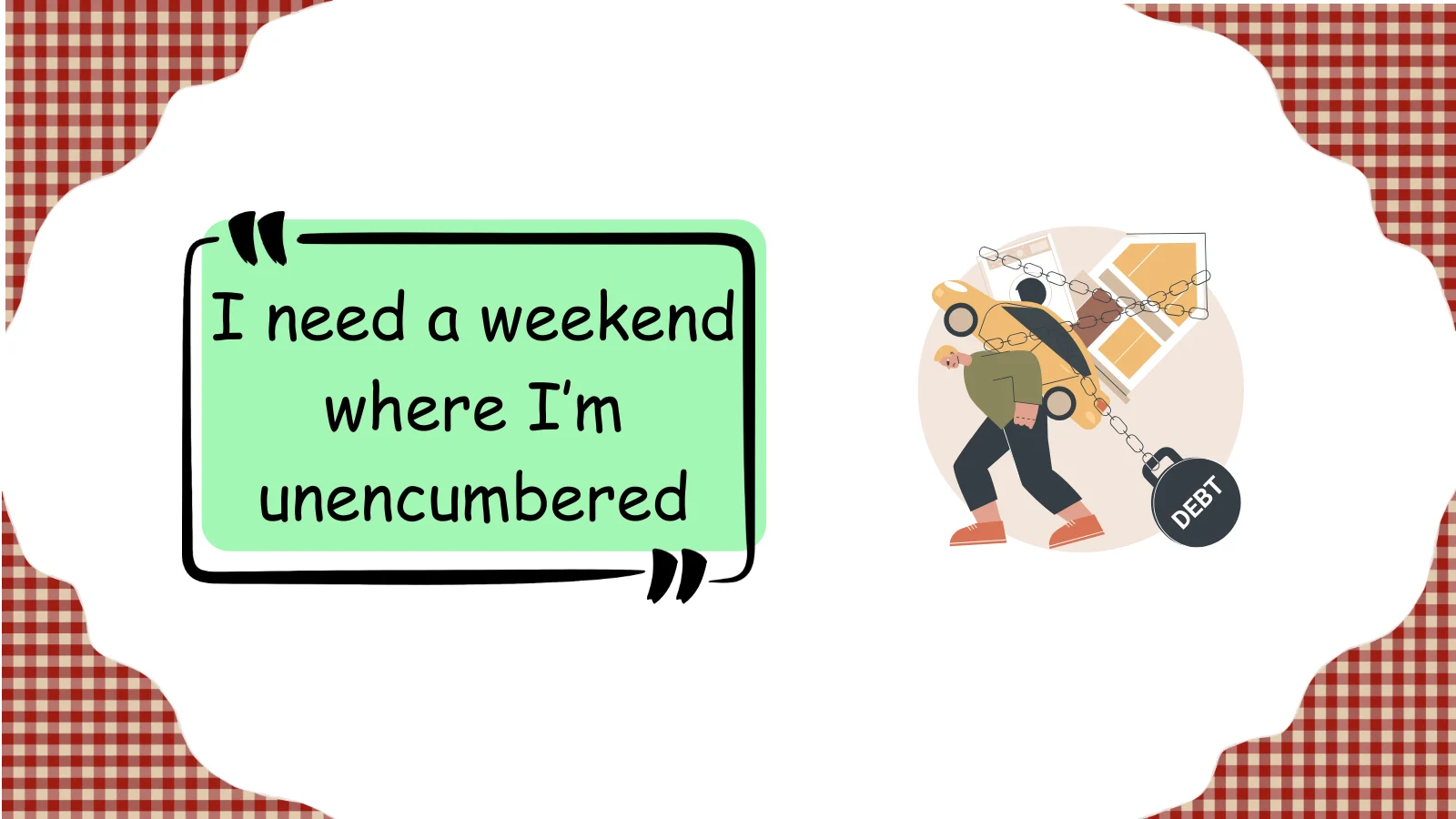
      • “I need a weekend where I’m unencumbered by chores and emails 😎.”
      • “Her vibe is unencumbered, just floating through life like it’s easy.”
    3. Tone matters:
      • In playful chats, you can exaggerate: “Me, after finishing all my exams: unencumbered and unstoppable!
      • In thoughtful discussions, it works literally: “Financially unencumbered, I can finally pursue my art without stress.”

    Examples of “Unencumbered” in Conversations

    Here’s how you might see it in modern texting or online conversations:

    Example 1 – Friend Group Chat:

    • Alex: “Are you coming to the hike tomorrow?”
    • Jamie: “Yes! Finally unencumbered by work, so I can join 😎”

    Example 2 – Social Media Comment:

    • User1: “Just quit my 9–5 and traveling for 3 months!”
    • User2: “Wow, living unencumbered—that’s the dream 🌍✨”

    Example 3 – Forum Thread:

    • Thread Topic: Minimalist living tips
    • Comment: “I sold my extra stuff and now feel truly unencumbered. Life is simpler.”

    Notice how the word communicates freedom, lightness, and a lack of constraints, fitting perfectly into 2026’s vibe of personal growth and self-expression online.


    Common Mistakes or Misunderstandings

    Even though it’s a powerful word, people sometimes misuse “unencumbered”:

    1. Confusing it with “unoccupied”
      • ❌ Wrong: “I’m unencumbered in my apartment tonight” (implies free from burdens, not just empty).
      • ✅ Correct: “I’m unencumbered tonight, no work or obligations!”
    2. Using it too casually
      • It works in friendly chats if done humorously, but overusing it can sound pretentious.
    3. Misinterpreting it as laziness
      • Being unencumbered doesn’t mean doing nothing—it means being free to choose your actions.

    Related Slangs or Abbreviations

    While “unencumbered” is not a classic acronym or slang, here are some modern text equivalents or vibes:

    • Free AF – A casual way to say you’re unburdened.
    • No strings attached (NSA) – Can convey freedom in relationships or commitments.
    • Chill / Unbothered – Emotionally unencumbered.
    • YOLO – Sometimes used to express the freedom to act without restrictions.

    Using these alongside unencumbered can make your messages more relatable in 2026 chat culture.


    How to Sound Natural Using “Unencumbered” in 2026

    Here’s a quick checklist for using unencumbered meaning effectively in texts or online:

    1. Pair it with relatable context: vacation, free weekends, financial freedom.
    2. Add emojis or tone markers: 😎✨🕊️ to make the word feel casual.
    3. Keep it short in chats: “Feeling unencumbered today!” beats long sentences.
    4. Don’t force it: It works best when the situation naturally aligns with freedom or lightness.

    7–8 FAQs About “Unencumbered”

    Q1: Is “unencumbered” a common chat abbreviation?

    • No, it’s usually spelled out in full, but it’s used in informal digital communication when describing freedom.

    Q2: Can I use it in texting with friends?

    • Absolutely! Just pair it with humor or relatable situations.

    Q3: What’s the opposite of unencumbered?

    • Encumbered, meaning burdened or restricted.

    Q4: Can “unencumbered” refer to financial freedom?

    • Yes, many use it to describe being free from debt or obligations.

    Q5: Is it too formal for social media?

    • It can be formal, but emojis and casual context make it fit online chats.

    Q6: Can it describe emotional freedom?

    • Definitely! “Feeling unencumbered” can mean stress-free or emotionally light.

    Q7: Is there a shorter slang version?

    • Not exactly, but phrases like “free AF” capture the same feeling.

    Q8: Can it be humorous in memes or captions?

    • Yes! Exaggerating situations like chores or work can make it funny.

    Conclusion

    In 2026, staying fluent in both classic words and modern texting culture is key.

    The word “unencumbered” is a versatile term that expresses freedom, lightness, and a lack of burdens perfect for personal reflections, social media posts, or playful chats.

    Remember: using it correctly makes your messages clear, relatable, and even a little clever.

    Pair it with emojis, humor, or real-life examples to keep it fresh and engaging.